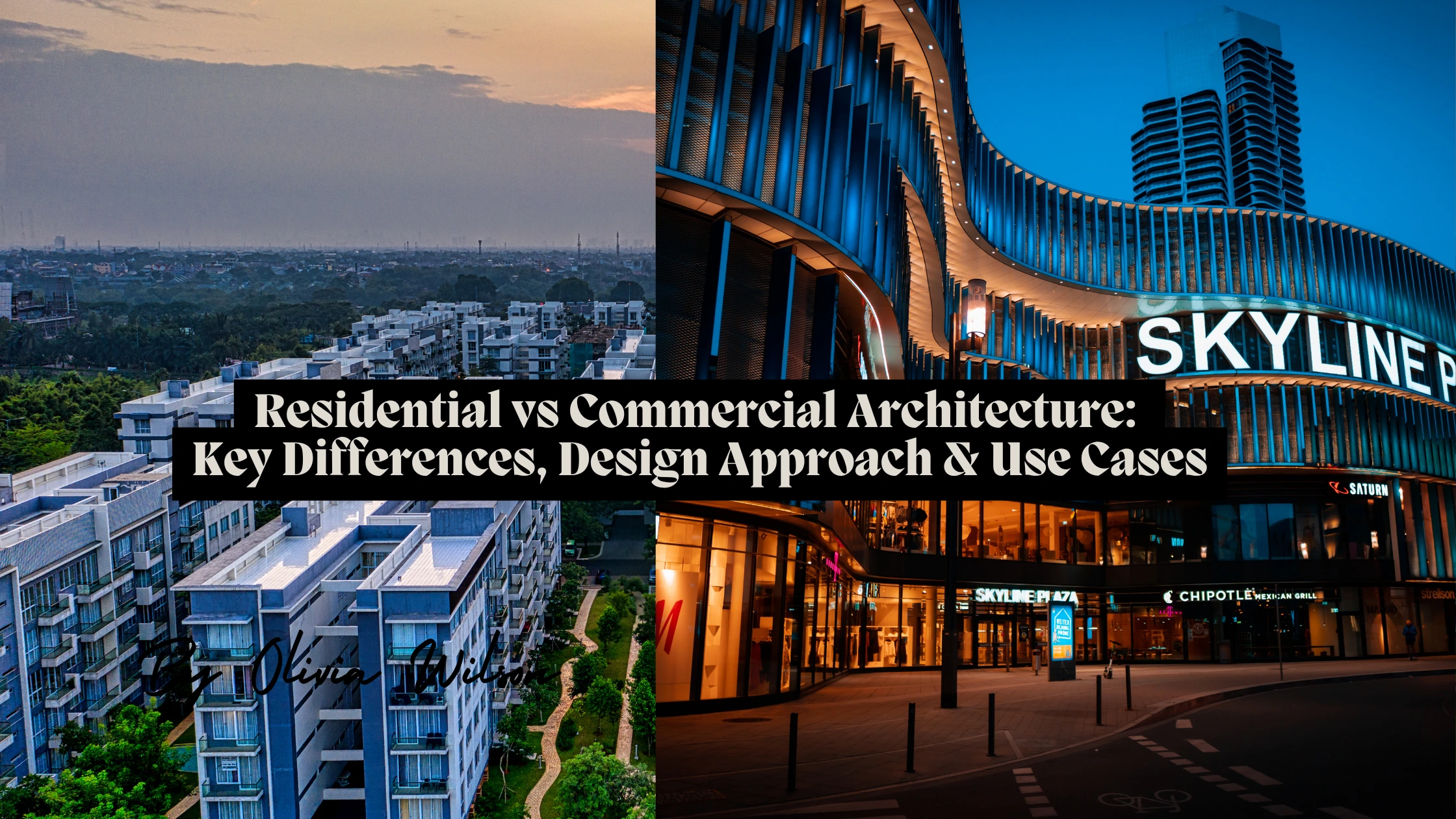
Architecture plays a vital role in shaping how we live and work. While both residential and commercial architecture follow fundamental design principles, their purpose, scale, and execution differ significantly. Understanding these differences helps homeowners, developers, and businesses choose the right architectural approach for their needs.
In this guide, we break down residential vs commercial architecture, their key differences, and how to decide which is right for your project.
What Is Residential Architecture?
Residential architecture focuses on designing living spaces that prioritize comfort, privacy, and personalization. These structures are created to support daily life while reflecting the homeowner’s lifestyle, tastes, and long-term needs.
Common Residential Architecture Projects
Independent houses and villas
Apartments and condominiums
Duplexes and townhouses
Residential communities
Residential architecture design emphasizes aesthetics, functionality, and emotional connection, making homes feel personal and welcoming.
What Is Commercial Architecture?
Commercial architecture is designed for business, public, or institutional use. These spaces must support operational efficiency, safety, branding, and large user volumes while complying with strict regulations.
Common Commercial Architecture Projects
Office buildings and IT parks
Retail stores and shopping malls
Hotels and restaurants
Hospitals and healthcare facilities
Educational and institutional buildings
Commercial architecture design focuses on durability, scalability, and performance, ensuring smooth operations and positive user experiences.
Residential vs Commercial Architecture: Key Differences
Built for business operations and public interaction
The purpose directly influences layout, materials, and design decisions.
2. Scale and Complexity
Residential buildings are usually smaller and simpler, while commercial projects are larger, multi-functional, and more complex, often involving multiple stakeholders and consultants.
Commercial spaces must guide people efficiently, while homes prioritize personal space.
4. Regulations and Building Codes
Commercial architecture must comply with stricter safety, fire, accessibility, and zoning regulations. Residential buildings follow building codes too, but with comparatively fewer requirements.
5. Materials and Durability
Residential projects may use aesthetic-focused materials
Commercial projects require high-durability, low-maintenance materials due to heavy usage
6. Budget and Cost Structure
Residential architecture budgets are driven by individual homeowners, while commercial architecture involves larger investments with ROI considerations such as operational efficiency and long-term maintenance costs.
7. User Experience
Residential spaces serve families and individuals, focusing on comfort and privacy.
Commercial spaces serve large audiences, requiring clear circulation, safety planning, and signage.
Sustainability in Residential and Commercial Architecture
Modern architecture integrates sustainable design practices across both sectors:
Energy-efficient lighting and HVAC systems
Natural ventilation and daylight optimization
Eco-friendly construction materials
Smart building technologies
Commercial buildings often pursue green certifications, while residential homes increasingly adopt sustainable living solutions.
How to Choose Between Residential and Commercial Architecture
Ask these key questions:
What is the primary purpose of the building?
Who will be the end users?
What level of regulation and compliance is required?
Is long-term scalability or ROI a priority?
Do you need an architect specialized in a specific building type?
Choosing the right architectural approach ensures better functionality, compliance, and long-term value.
Conclusion
While residential and commercial architecture share foundational design principles, their execution, scale, and objectives are entirely different. Understanding these differences helps clients make informed decisions and ensures successful architectural outcomes tailored to purpose and use.
Whether you’re designing a home or a business space, choosing the right architectural expertise is key to long-term success.