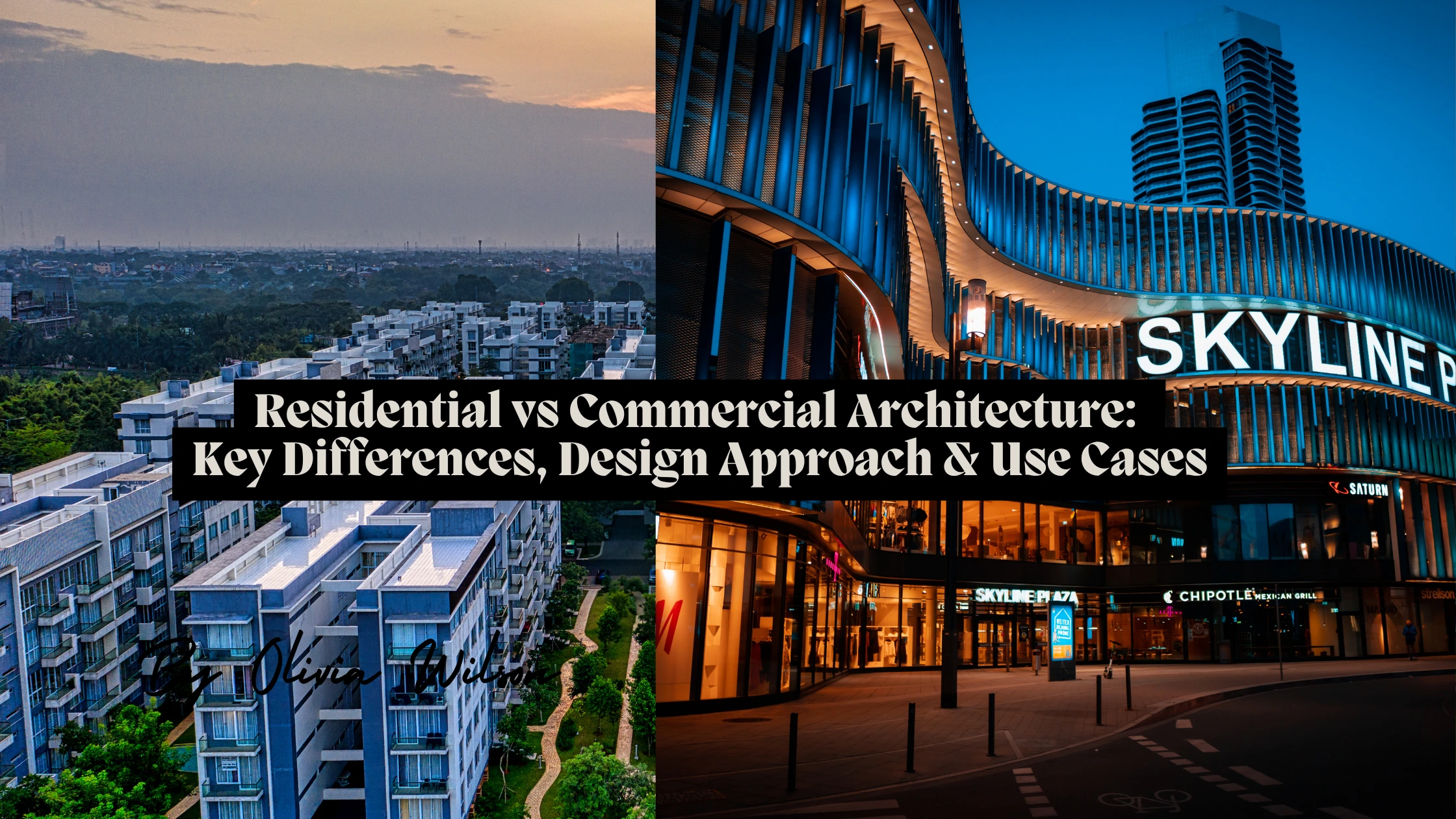
Residential vs Commercial Architecture: Understanding the Art, Science, and Strategy Behind Each
Architecture is far more than the act of constructing buildings — it is the thoughtful orchestration of space, purpose, and experience. While residential and commercial architecture may share foundational design principles, their intent, execution, and impact differ profoundly. Understanding these differences is essential when planning a home, a workplace, or a large-scale commercial development.
This guide explores the nuanced distinction between residential architecture and commercial architecture, through the lens of design philosophy, technical complexity, user experience, and long-term value.
Purpose and Design Philosophy
At its core, residential architecture is deeply personal. It is designed around individual lifestyles, emotional comfort, and daily rituals. Homes are intimate environments where spatial planning reflects privacy, warmth, and identity. Every design decision — from room proportions to material textures — is driven by how occupants live, relax, and connect.
Commercial architecture, on the other hand, is purpose-driven and strategic. These spaces are designed to support business operations, public interaction, and brand presence. Offices, retail environments, hospitality projects, and institutional buildings must balance functionality, efficiency, and visual impact while accommodating large and diverse user groups.
Scale, Complexity, and Project Life Cycle
Residential projects typically operate on a smaller scale with a relatively streamlined design and execution process. Decisions are made by fewer stakeholders, timelines are flexible, and customization is central to the design journey.
Commercial architectural projects are inherently more complex. They involve multiple stakeholders — developers, consultants, regulatory bodies, investors, and end users. The design process is structured into multiple phases, each requiring approvals, technical validation, and coordination across disciplines. This complexity demands a higher level of architectural planning, precision, and project management.
Commercial architecture design focuses on durability, scalability, and performance, ensuring smooth operations and positive user experiences.
Regulatory Standards and Compliance
One of the most significant distinctions between residential and commercial architecture lies in regulatory requirements.
Residential buildings must comply with local building codes, zoning regulations, and safety norms focused on habitability and occupant comfort.
Commercial buildings are subject to far more rigorous standards. These include advanced fire safety systems, emergency evacuation planning, accessibility compliance, structural load requirements, and environmental regulations. Such mandates heavily influence layout planning, structural design, and material selection, making commercial architecture more technically demanding.
Materials, Construction Systems, and Durability
In residential architecture, material selection often prioritizes aesthetic appeal, comfort, and personalization. Natural finishes, bespoke detailing, and tactile surfaces play a vital role in creating a refined living environment.
Commercial architecture emphasizes durability, performance, and longevity. Materials are selected to withstand heavy foot traffic, extended operational hours, and environmental stress. Structural systems such as reinforced concrete, steel frameworks, high-performance glazing, and industrial-grade finishes are integral to ensuring safety, efficiency, and long-term value.
Spatial Planning and Circulation
Residential design focuses on intuitive flow, privacy, and spatial harmony. Circulation patterns are crafted to support family dynamics, comfort, and a sense of retreat.
Commercial architecture prioritizes efficient movement and accessibility. Spaces must accommodate large volumes of people while maintaining clarity of circulation, seamless wayfinding, and operational efficiency. Public zones, service areas, and transitional spaces are carefully planned to optimize both function and experience.
Technology and Building Systems
Residential spaces typically integrate essential technologies such as climate control, lighting automation, and security systems designed to enhance comfort and convenience.
Commercial buildings rely on highly sophisticated infrastructure. Advanced HVAC systems, fire suppression networks, smart access control, integrated IT frameworks, and energy management systems are critical for operational efficiency, safety, and scalability. These systems are often embedded into the architectural design from the earliest planning stages.
Brand Identity and Experiential Design
A home reflects personal taste and lifestyle aspirations. Its architecture tells a private story.
Commercial architecture tells a public one.
Retail stores, offices, hotels, and corporate campuses are often designed as extensions of brand identity. Architecture becomes a strategic tool — shaping perception, influencing behavior, and creating memorable experiences. Design decisions are informed not just by aesthetics, but by psychology, branding, and user engagement.
Sustainability and Performance
Sustainable design is integral to both residential and commercial architecture, though its application differs.
Residential architecture focuses on enhancing occupant well-being through natural light, ventilation, energy efficiency, and environmentally responsible materials.
Commercial architecture often adopts sustainability at scale, pursuing certifications such as LEED or IGBC. These projects emphasize energy optimization, reduced operational costs, and long-term environmental performance, aligning design excellence with corporate responsibility.
Cost, Value, and Long-Term Returns
In residential architecture, investment decisions are driven by emotional value, comfort, and quality of life. The success of a home is measured by how well it supports daily living and long-term satisfaction.
Commercial architecture is intrinsically linked to financial performance. Design directly impacts asset value, rental potential, brand positioning, and operational efficiency. Every architectural choice is evaluated through both aesthetic and economic lenses, making design a critical driver of return on investment.
Final Perspective
While residential architecture is an intimate expression of individuality and lifestyle, commercial architecture is a strategic asset — one that merges design excellence with performance, compliance, and long-term value.
Choosing the right architectural approach is not simply about building type; it is about understanding purpose, scale, and vision. When architecture is thoughtfully executed, it elevates not only spaces — but the experiences and outcomes they create.